
Before PlayStation, before Ludo on your phone, there was a carved wooden board, two rows of holes and a handful of seeds. Many of us first saw it under a tree, with an uncle or grandfather who would beat you, laugh, and say "again?"
The game has many names. In Ghana it is oware, widely believed to be of Ashanti origin. Yoruba people call it ayo or ayoayo. Igbo players know it as ncho or okwe, it is ise in Edo, awale among the Ga, awale in Ivory Coast and Benin, and wari in Mali. Carry it to the Caribbean and it becomes warri. All of them belong to the mancala family of "pit and pebble" games.
A classic oware board has two rows of six pits, called houses, and 48 seeds, four in each house at the start. You scoop the seeds from one of your houses and sow them one by one around the board. If your last seed lands in your opponent's house and makes two or three, you capture them. Easy to learn, hard to master.
In East Africa the big one is bao, from the Swahili word for "board". It is played on four rows of eight pits and is known as one of the deepest and most complex mancala games. In Zanzibar a bao master is held in real respect, and Tanzania and Zanzibar have bao societies that run tournaments.
Good news for the diaspora: boards are easy to buy online, and there are apps if you want to practise before you face your uncle at Christmas. A board also makes a beautiful gift that says "home" without a single word.
Over to you:
1. What do you call this game where you come from, and who taught you?
2. Do you still have a board at home, or did it disappear years ago?
3. Should community groups and clubs bring back ayo, oware and bao tournaments?
Sources: https://en.wikipedia.org/wiki/Oware · https://en.wikipedia.org/wiki/Bao_(game)
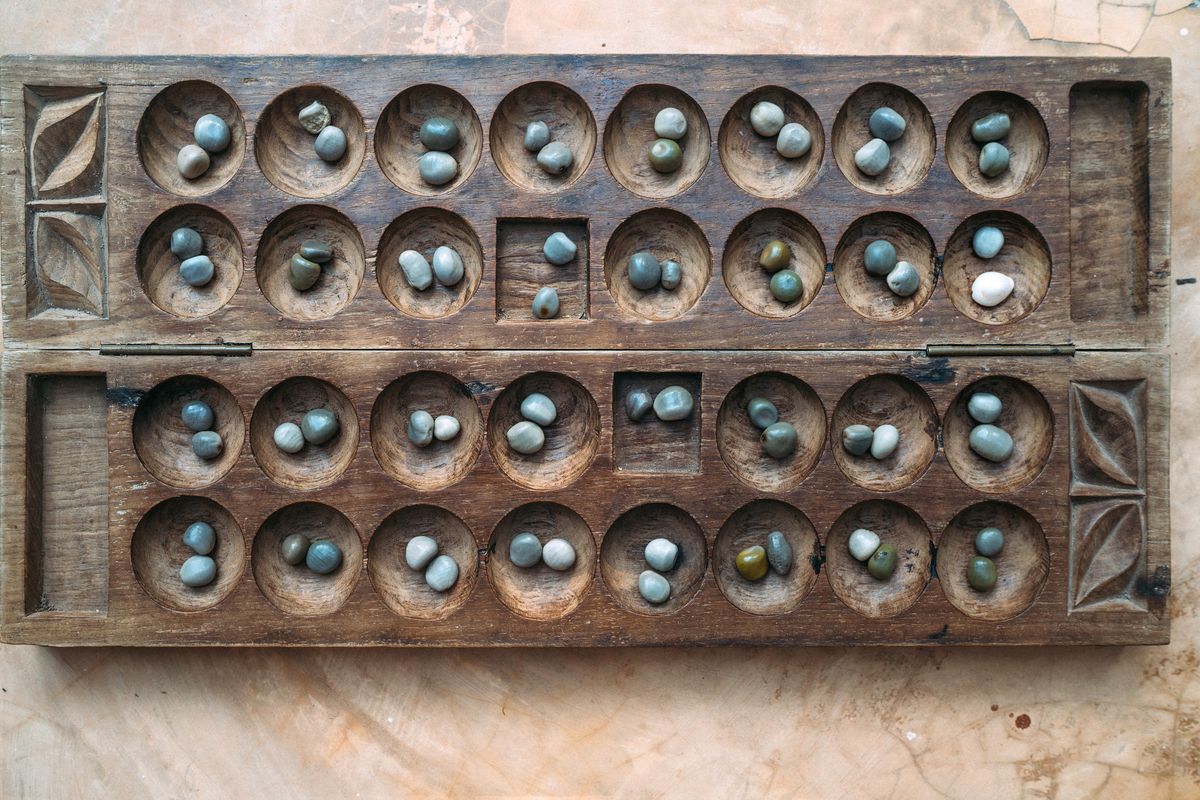
Photo: iStock
Posted by the Jump.AFRICA team to start the conversation. Jump in below
