Nigeria's main traffic regulations are the National Road Traffic Regulations 2012, made on 13 August 2012 by the Federal Road Safety Commission under section 5 of the FRSC (Establishment) Act 2007. They set the rules on licences, vehicle equipment, seat belts, phone use, drink-driving and speeding, and attach a fine and penalty points to each offence. The Federal Road Safety Corps (FRSC) enforces them on federal highways, while states such as Lagos add their own laws on top.
The legal framework in brief
- FRSC (Establishment) Act 2007: passed by the National Assembly, it created the Commission and its enforcement arm, the Corps. The current Corps Marshal, according to the FRSC website, is Shehu Mohammed.
- National Road Traffic Regulations 2012: the detailed rulebook, covering vehicle registration, driver's licences, equipment, conduct on the road and a schedule of offences with fines and points.
- State traffic laws: states regulate local matters. Lagos, for example, enforces the Transport Sector Reform Law 2018 through LASTMA and mobile courts.
Key rules every driver should know
- Carry a valid licence for your vehicle class. Regulation 44 sets classes from A (motorcycles) and B (cars under 3 tonnes, excluding commercial vehicles) to G (articulated vehicles) and J (special licences for physically challenged drivers).
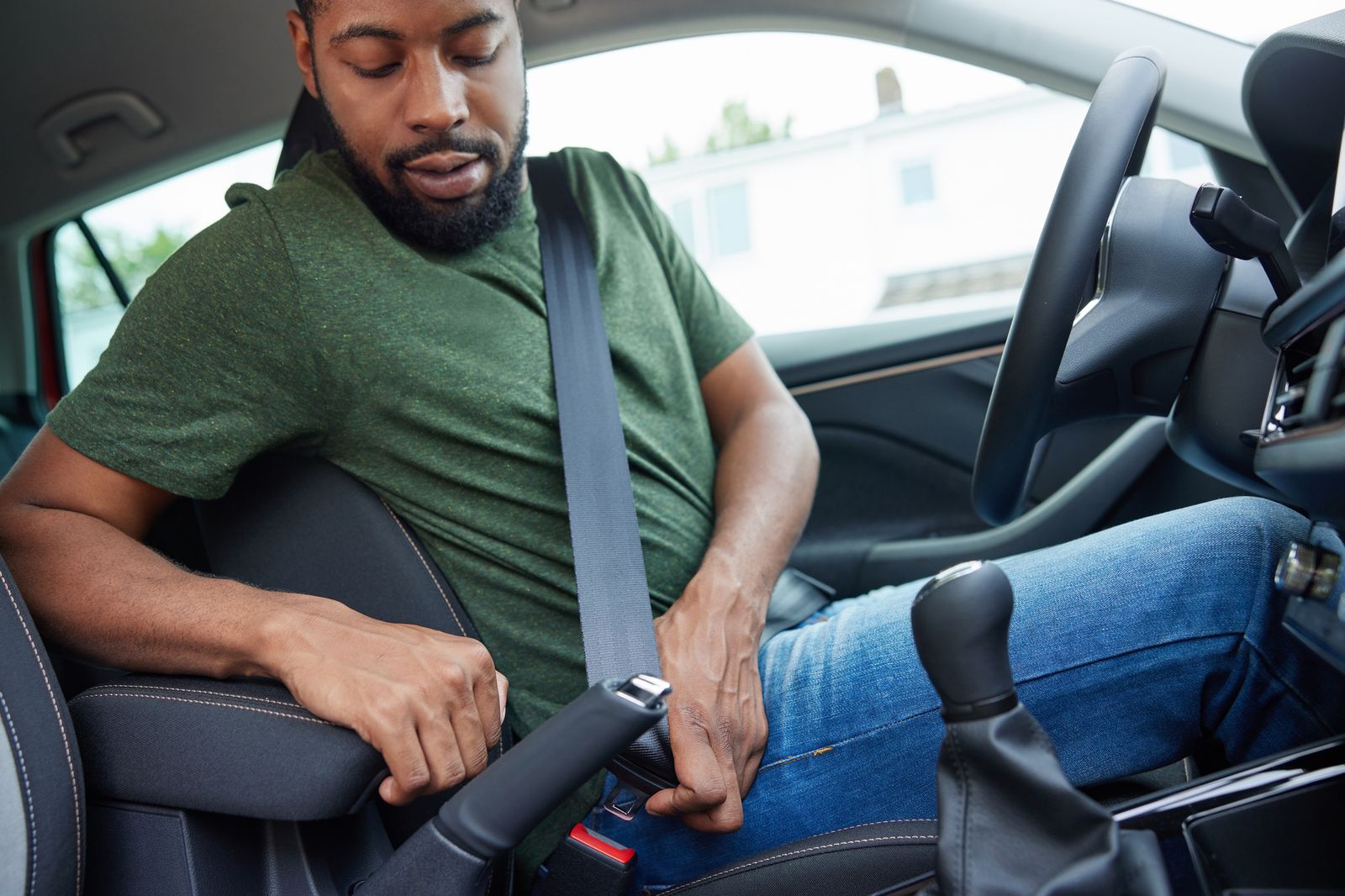
- Wear a seat belt, front and back. Regulation 126 requires belts for the driver and all occupants while moving, child safety seats for children aged 7 and under, and no child seats in the front row.
- No phone calls or texting while moving. Regulation 166 bans making or receiving calls in any form, including messages and internet use, except emergency calls to police, fire or ambulance services.
- Stay under the alcohol limit. Regulation 175 sets the blood or urine limit at 80 milligrams per 100 millilitres, measured by breathalyser or medical test. Refusing a test is itself an offence.
- Respect speed limits. Regulation 152 prohibits exceeding the limits in Schedule 8 or on road signs, and requires vehicles to be fitted with speed limiters.
- Carry the required kit. Regulation 119 lists a horn, jack, wheel spanner, fire extinguisher, inflated spare tyre, first aid box, warning triangles or cones, laminated windscreen, mirrors, wipers, plus insurance and roadworthiness certificates. A private car needs at least one 2kg extinguisher that has not expired.
- Keep tyres legal. Tread must be at least 1mm deep around the whole tyre.
- No tinted glass unless approved by the appropriate authority for security reasons (Regulation 130).
Common offences, fines and penalty points
The table below is taken from the Notice of Offence Sheet (Form MVA 27, Schedule 11) in the official 2012 regulations published by the FRSC. Amounts are in naira.
| Offence | Code | Points | Fine |
|---|---|---|---|
| Light or sign violation | LSV | 2 | ₦2,000 |
| Failure to move over | FMO | 3 | ₦3,000 |
| Wrongful overtaking | WOV | 3 | ₦3,000 |
| Fire extinguisher violation | FEV | 3 | ₦3,000 |
| Number plate violation | NPV | 3 | ₦3,000 |
| Driving with worn-out tyre | TYV | 3 | ₦3,000 |
| Use of phone while driving | UPD | 4 | ₦4,000 |
| Speed limit violation | SLV | 5 | ₦5,000 |
| Seat belt use violation | SUV | 5 | ₦5,000 |
| Road obstruction | ROB | 5 | ₦5,000 |
| Driving under alcohol or drug influence | DUI | 5 | ₦5,000 |
| Driver's licence violation | DLV | 10 | ₦10,000 |
| Overloading | OVL | 10 | ₦10,000 |
| Route violation | RTV | 10 | ₦10,000 |
| Dangerous driving | DGD | 10 | ₦50,000 |
A note on conflicting figures: some individual regulations state different amounts from the offence sheet. Regulation 126 gives ₦2,000 for seat belt offences and Regulation 152 gives ₦3,000 for speeding, and a widely shared August 2026 media list also quotes ₦2,000 for seat belts. Several regulations also allow a court to impose a jail term instead of, or as well as, a fine. If you are booked, the amount on your notice of offence is what applies; ask the officer to confirm it.
How penalty points work
Points are recorded against your licence each time you are booked. Under Regulation 66, the FRSC may suspend your licence for up to six months if you build up more than 14 points within 12 months. Reaching 21 points, or two consecutive suspensions, leads to the licence being withdrawn for a year. A conviction for drink-driving or speeding can also trigger suspension on its own.
The offence sheet allows minor cases to be settled by paying the prescribed penalty into a designated bank account rather than going to court. Pay only through official channels and keep your receipt.
Lagos State: stricter local rules
Lagos enforces its Transport Sector Reform Law 2018 alongside federal rules, and some of its penalties are much tougher:
- One-way driving: Lagos mobile courts have ordered vehicles forfeited to the state. In one case reported in November 2020, 31 drivers who drove against traffic lost their cars.
- BRT lanes: driving in bus rapid transit corridors is an offence punished by fines.
- Trailers: barred from the metropolis between 6am and 9pm, with a ₦50,000 fine, six months' jail or both, plus impoundment.
- Motorcycles: commercial motorcycles and tricycles are restricted on major highways, helmets are compulsory and breaches can attract up to three years' imprisonment.
Tips for diaspora drivers visiting Nigeria
- Check the car before you drive it. A borrowed or rented car may be missing an in-date extinguisher, warning triangle or spare tyre, and each gap is a bookable offence.
- Verify the plates and papers. Make sure the vehicle's registration, insurance and roadworthiness documents are current. You can verify a plate number online before buying or borrowing a car.
- Put the phone away. Hands-free habits from abroad do not change the rule: Nigeria's regulation bans calls while moving.
- Know who is stopping you. FRSC officers wear uniforms and carry identification; in Lagos you may also meet LASTMA officials. Stay calm, ask for the offence code and avoid cash payments by the roadside.
- Tune in for updates. The FRSC runs National Traffic Radio on 107.1 FM in Abuja for road and traffic information.