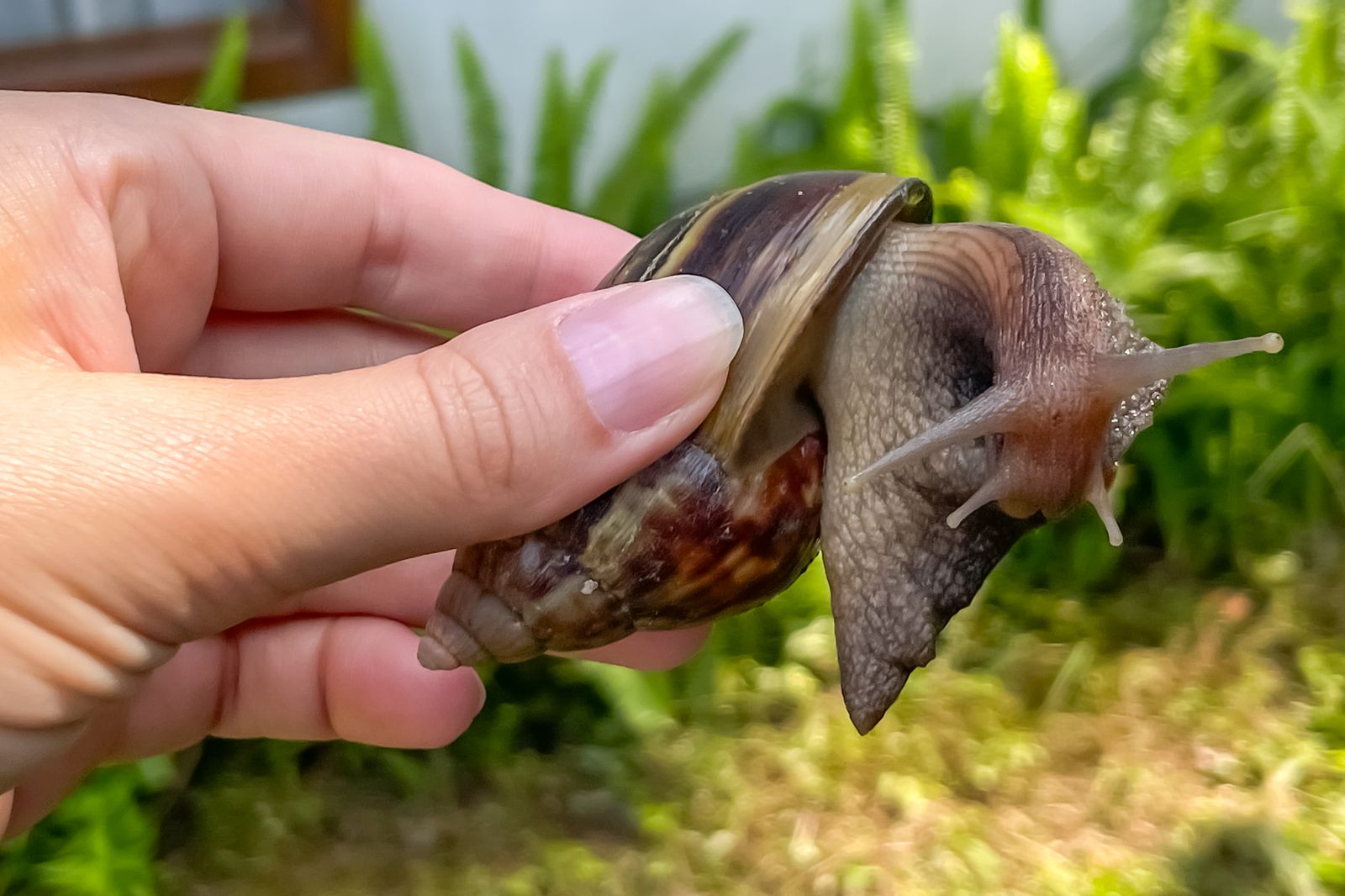
Snail farming (also called heliciculture or snailry) is the rearing of edible land snails for meat, and it is one of the cheapest livestock businesses to start in Nigeria. A small farm of 100–200 snails could be set up for about N50,000–N150,000 in 2026, and large snails sold for about N1,000–N4,000 each in Lagos and Abuja during the dry season. The trade-off is patience: most snails take 12–24 months from stocking to harvest.
Why snail farming appeals in Nigeria
- Low startup costs compared with poultry, fish or pigs.
- Cheap feed: snails eat leaves, fruit peels and farm waste.
- Strong demand: snail meat is high in protein and popular in the south, and wild supply falls sharply in the dry season.
- Little noise or smell, so it can work in a backyard.
Choosing a snail species
| Species | Common name | Strengths | Drawbacks |
|---|---|---|---|
| Archachatina marginata | Big black snail | Hardy; matures in about 8–10 months; best for beginners | Lays fewer eggs (about 5–11 per clutch, 2–3 times a year) |
| Achatina achatina | Giant Ghana or tiger snail | Largest size and most meat; can lay many eggs a year | Sensitive to temperature; slower to mature (18–24 months) |
| Achatina fulica | East African land snail | Breeds fast | Smaller; lower market price |
How to start a snail farm: step by step
- Pick a site. Choose a shaded, sheltered spot away from strong wind and direct sun, with good drainage.
- Build housing. Beginners usually use hutch boxes (wooden frames with mesh, filled with at least 10 cm of loose loamy soil) or trench pens lined with blocks and covered with netting. A 5 m x 5 m pen is a common size for an indoor unit.
- Prepare the soil. Use loose, loamy, chemical-free soil. Sandy soil dries out and heavy clay waterlogs eggs.
- Buy healthy breeding stock. Get mature snails from a reputable farm rather than random market traders, and check shells for cracks.
- Avoid overcrowding. Give snails room to move and feed without competition. Crowding causes stress, disease and slow growth.
- Feed and water daily. Offer fresh leaves and fruit, keep soil moist but not wet, and mist on dry days.
- Keep records of stocking dates, egg-laying, hatching and deaths so you can see what works.
Feeding snails
Good feeds include pawpaw leaves and fruit, cocoyam, cassava, okra and cabbage leaves, cucumber, mango, plantain and sweet potato. Always provide calcium, such as crushed eggshell, limestone or oyster shell, for strong shells. Salt kills snails, so never give salty leftovers.
Costs and returns in 2026
| Farm size | Estimated startup cost |
|---|---|
| 100–200 snails | N50,000–N150,000 |
| 200–500 snails | N150,000–N400,000 |
| 1,000+ snails | N500,000–N850,000 and up |
On the selling side, 2026 estimates put large snails at N1,000–N4,000 each in Lagos and Abuja, dry-season prices at N800–N2,000 depending on size, and rainy-season roadside prices at about N300–N500. These figures come mainly from one 2026 guide, so check prices in your local market before you plan.
Best time to start
Stock in the rainy season, roughly July to October, when snails breed. Aim to sell in the dry season, when wild snails disappear and prices rise. Harmattan (around January–February) is the hardest time, because dry air makes snails go dormant, so keep pens shaded and moist.
Common problems to avoid
- Ants, which kill hatchlings. Stand hutch legs in water troughs.
- Predators such as rats, toads, lizards and birds. Use secure mesh.
- Calcium deficiency, which causes thin shells and deaths.
- Chemicals and salt in soil or feed.
- Selling too early. Small snails fetch much less.
A note for diaspora investors
Snail farming can be run by a trusted relative or caretaker, but it needs daily attention. Start small, ask for photos and records, and scale only after one full cycle. Connect with other agribusiness owners on our network.