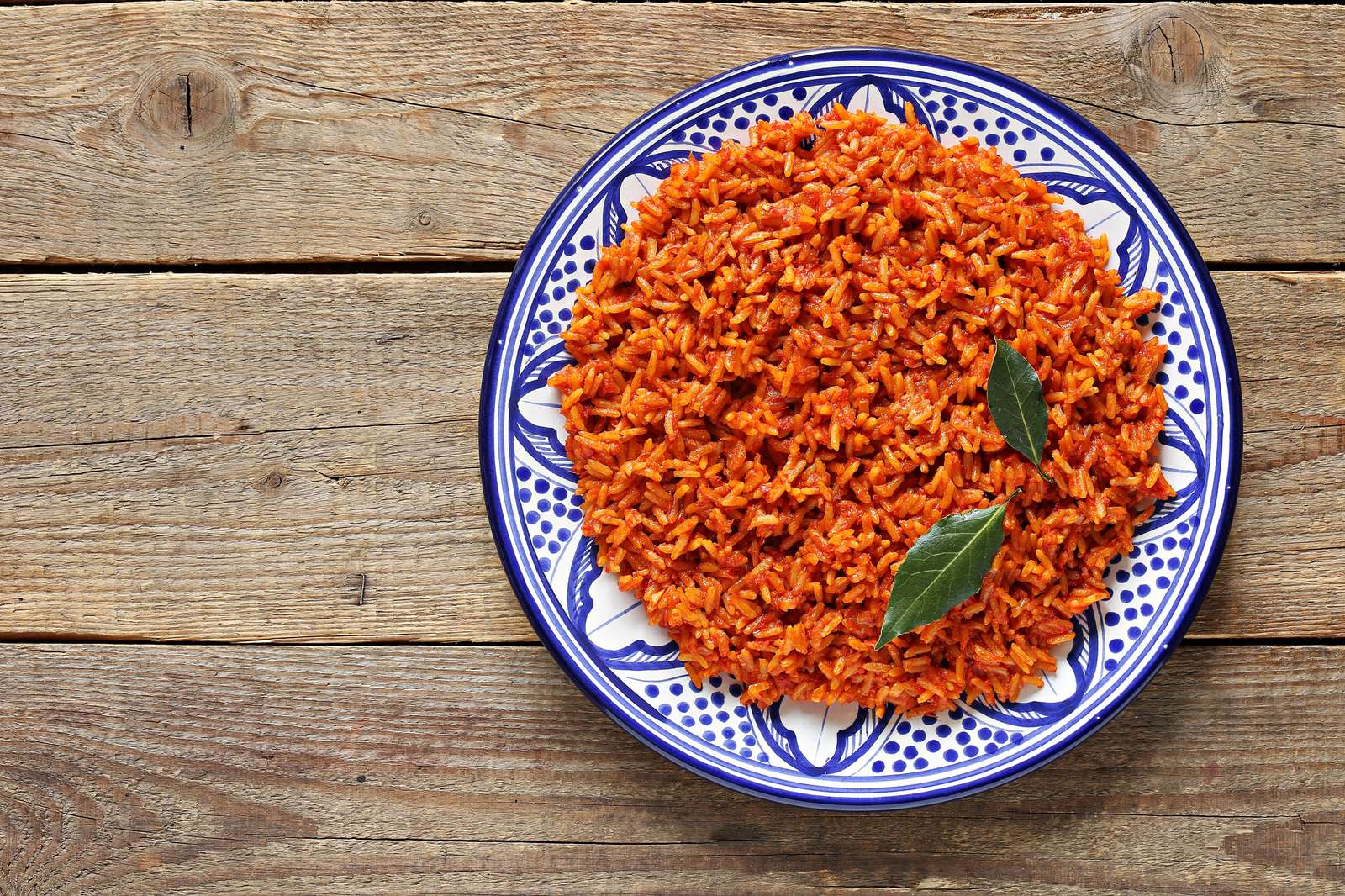
Jollof rice is a West African one-pot dish of rice cooked in a rich tomato, red pepper and onion sauce with stock and spices. In Nigeria it is the centre of every party table. To make it well, fry your pepper base until it is deep red and sweet, add stock and washed parboiled rice, then cook covered on low heat until the grains are tender and separate. Here is a full, step-by-step recipe that serves about six.
Ingredients (serves 6)
- 3 cups long-grain parboiled rice
- 5 medium plum tomatoes (or 1 tin of plum tomatoes)
- 3 large red bell peppers (tatashe)
- 1–2 scotch bonnet peppers (ata rodo), to taste
- 2 medium onions (one blended, one sliced)
- 3 tablespoons tomato paste
- 1/2 cup vegetable oil
- 3–4 cups chicken or beef stock
- 2 teaspoons curry powder and 1 teaspoon dried thyme
- 2 bay leaves
- 2 stock cubes and salt, to taste
- Optional: 1 tablespoon butter, a little smoked paprika, sliced tomato and onion to garnish
How to cook Nigerian jollof rice: step by step
- Make the pepper base. Blend the tomatoes, red bell peppers, scotch bonnet and one onion until smooth. Boil the blend in a pot for 10–15 minutes to reduce excess water.
- Wash the rice. Rinse the parboiled rice in warm water two or three times until the water runs mostly clear, then drain. This removes surface starch so the grains don't clump.
- Fry the tomato paste. Heat the oil in a heavy pot, add the sliced onion and fry until soft. Stir in the tomato paste and fry for 3–5 minutes until it darkens slightly. This removes the sour, raw taste.
- Fry the pepper base. Add the reduced blend and fry on medium heat, stirring often, for 15–20 minutes until the oil rises to the top and the sauce smells sweet rather than sharp.
- Season. Add curry powder, thyme, bay leaves, stock cubes and salt. Pour in about 3 cups of stock and bring to a boil. Taste: it should be slightly saltier than you'd like the finished rice, because the rice absorbs seasoning.
- Add the rice. Stir in the drained rice. The liquid should sit just level with the rice, not far above it. Cover the pot with foil or a tight lid to trap steam.
- Cook low and slow. Reduce to low heat and cook for 25–35 minutes. Check occasionally and add a little stock only if the rice is dry but still hard. Avoid stirring too much, which breaks the grains.
- Create the party flavour. When the rice is almost done, leave it on low heat for a few more minutes so the bottom toasts slightly. Stir the toasty bits through for that smoky taste.
- Finish. Stir in butter if using, garnish with sliced tomato and onion, cover for 5 minutes, then serve.
Tips for perfect jollof every time
- Use a heavy pot. Thin pots burn the bottom before the top cooks.
- Don't drown the rice. Too much liquid makes it soggy; you can always add more later.
- Fry the base properly. Under-fried pepper is the most common reason jollof tastes sour.
- Steam, don't boil. Foil under the lid locks in steam and cooks the rice evenly.
- Cooking for a crowd? Multiply the recipe, but cook in more than one pot rather than one overfilled pot.
What to serve with jollof rice
Classic sides include fried plantain (dodo), fried or grilled chicken, beef or turkey, coleslaw, moi moi and a simple salad. At Nigerian parties, jollof often shares the plate with fried rice and small chops.
Where jollof rice comes from
The name comes from the Wolof, or Jolof, empire, which ruled parts of present-day Senegal and The Gambia from about the 14th to 16th centuries. Senegal's thieboudienne, rice cooked with fish and vegetables in a tomato base, is widely seen as the dish's ancestor. As people and trade moved along the coast, each country developed its own version, which is why Nigerian, Ghanaian, Senegalese, Sierra Leonean and Liberian jollof all taste different.
The Nigeria vs Ghana jollof rivalry
The friendly "jollof wars" between Nigeria and Ghana play out online every year, especially around World Jollof Rice Day on 22 August. Nigerians tend to favour parboiled long-grain rice and a smoky, firewood-style finish, while Ghanaians often use fragrant basmati or jasmine rice. Senegal, as the dish's home, sometimes reminds both sides who started it. There's no official winner; the best jollof is the one your family makes.
Jollof rice abroad
If you live outside Nigeria, most ingredients are easy to find. Use tinned plum tomatoes and fresh red peppers, and look for scotch bonnets in African or Caribbean shops. Long-grain parboiled rice is sold in most supermarkets. Hosting a Nigerian night? Check our events page for diaspora food festivals and gatherings.